
Build experiences people can step into
We design and engineer AR, VR and immersive applications for training, visualisation, customer experience and interactive products, built around a real use case rather than the technology for its own sake.
AR VR Spatial experiences Interactive 3D
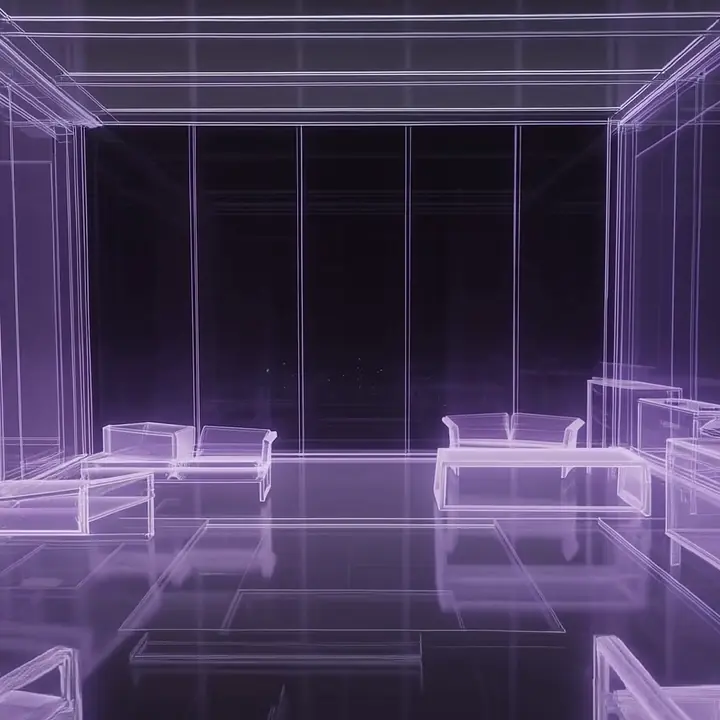
Some things are easier to experience than explain
Immersive technology earns its place when experiencing something creates more value than reading about it on a conventional screen.
See
Explore something before it physically exists.
Practise
Learn or rehearse without recreating the real situation.
Interact
Work with products, information and environments spatially.
Understand
Make complex things easier to explore from different perspectives.
What could you build with immersive technology?
From interactive worlds and product experiences to training, learning and spatial applications, the starting point is what you want someone to experience.
Gaming & interactive worlds
Immersive games, interactive environments and virtual experiences.
Training & simulation
Practise scenarios, processes and skills safely and repeatedly.
Products & commerce
Let people explore, configure and experience products in context.
Property & spaces
Walk through spaces, layouts and environments before physical delivery.
Learning & culture
Use immersive environments for education, exhibitions, heritage and interactive storytelling.
Industry & healthcare
Use immersive visualisation and simulation to understand, practise and communicate complex tasks.
Something else in mind? Start with the experience you want to create.
The experience is only useful if the product works
- 01
Concept
User, environment, interaction and outcome.
- 02
Prototype
Test the experience before the full build.
- 03
Spatial design
Environments, objects and interfaces.
- 04
Engineering
The software and the immersive functionality.
- 05
Integration
APIs, data, cloud and existing systems.
- 06
Test
On the intended devices, in the intended environment.
- 07
Deploy
Release, documentation and technical handover.
Immersive applications can rely on the same foundations as any other digital product: software engineering, APIs, cloud infrastructure, data, security and integrations. We bring those pieces together around the experience, as part of Engineering.
We deliver the commissioned application to the agreed specification. Optional ongoing support, maintenance and improvement are available afterwards if you want them.
The technology follows the experience
We choose the platform and capabilities around what the experience needs to do, rather than forcing every project onto the same technology.
Where it lives
- Mobile AR
- Headset-based VR
- Spatial computing
- Web-based 3D
- Desktop applications
- Connected devices
The specific engines, frameworks and device SDKs are chosen during scoping, against the target devices and the environment the application has to work in.
When AI adds value
- Computer vision
- Conversational interaction
- Adaptive experiences
- Intelligent assistance
AI is optional. We use it where it materially improves the experience, not because every immersive application needs it.
Questions worth answering
Do we need to know whether we need AR or VR?
No. Start with the experience or problem you want to solve. We can help determine whether AR, VR, interactive 3D or a conventional application is the more appropriate approach.
Can you build for existing headsets and devices?
Yes, where the required platform and use case are technically appropriate. The target devices are agreed during scoping.
Can AR or VR integrate with our existing systems?
Yes. Immersive applications can be engineered to work with existing APIs, data sources and business systems where required.
Can you build a prototype before the full application?
Yes. For many immersive projects, a focused prototype is a sensible way to validate the interaction, device choice and technical approach before committing to the complete build.
Do we have to retain Pixelette after launch?
No. The application is yours. Optional ongoing support, maintenance and improvement are available afterwards if you want them.
Make it something people can experience
Tell us what you want people to see, practise, understand or interact with. We will help determine the right way to engineer it.